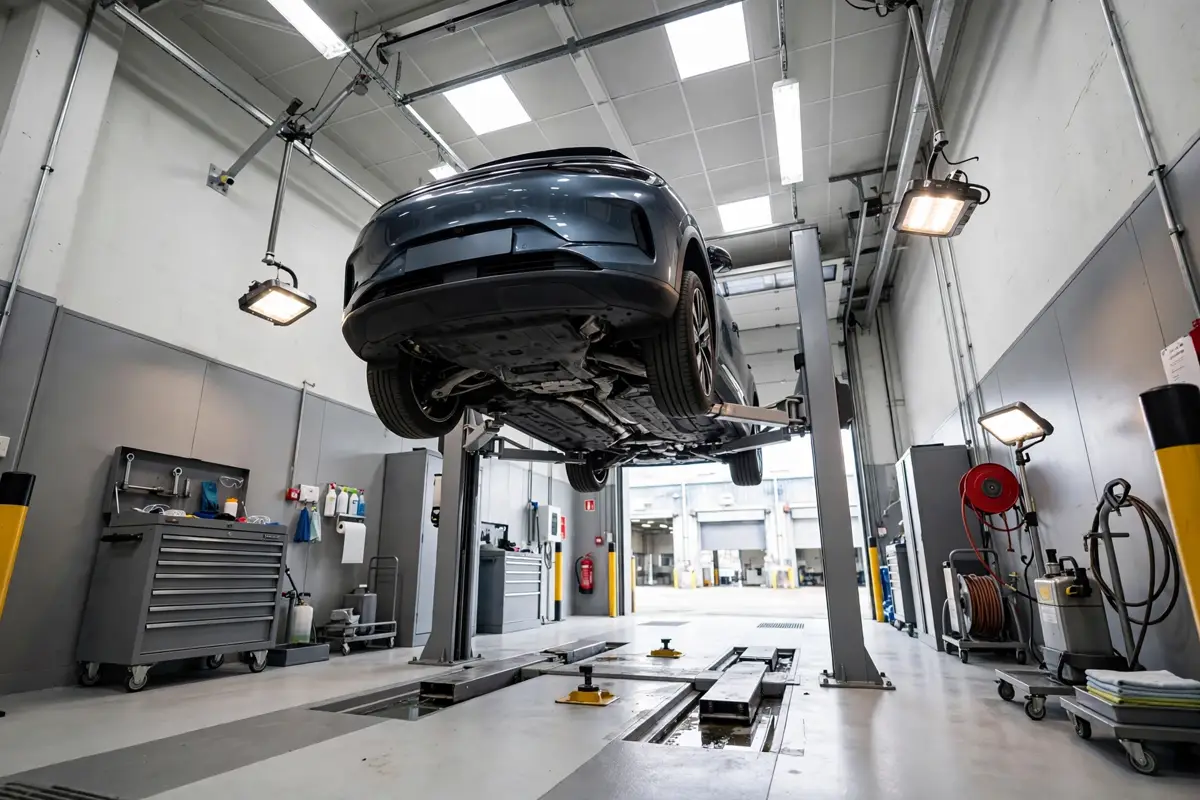
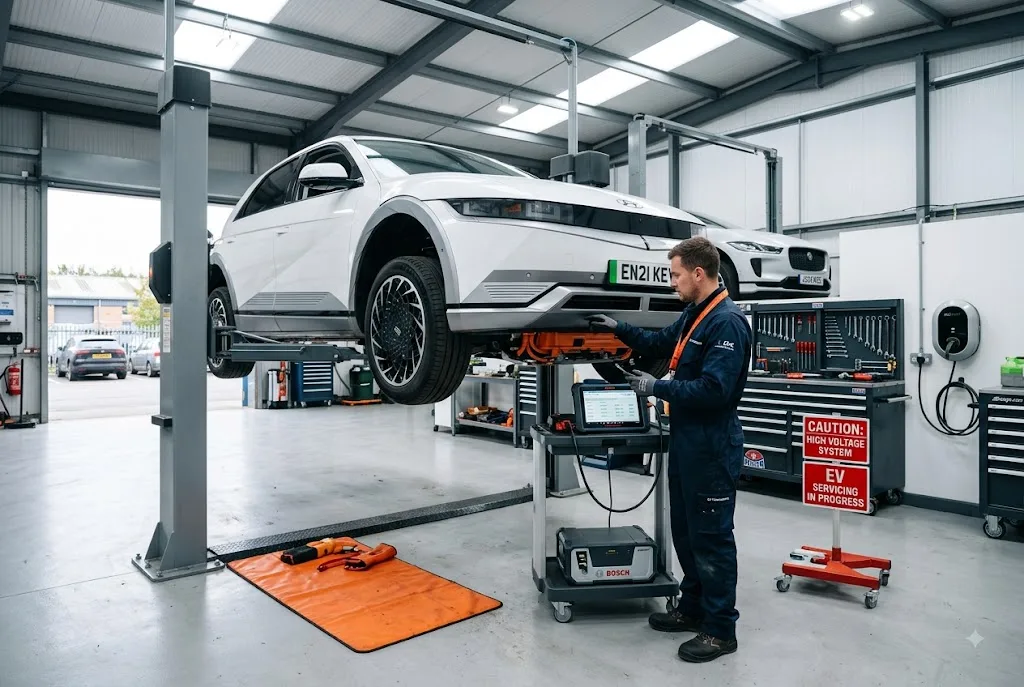
EV servicing is an important part of owning an electric vehicle in the UK. Although electric cars generally have fewer mechanical components than petrol or diesel vehicles, they still require regular inspections and maintenance. Battery systems, brakes, tyres, suspension, charging equipment, software and high-voltage components all need appropriate attention to keep an EV safe and reliable.
For new EV owners, the servicing process can seem unfamiliar. There is no conventional engine oil to replace, but that does not mean an electric car can simply be driven without maintenance. Understanding what technicians check, when an EV needs attention and how to choose suitable EV mechanics can make electric vehicle ownership much easier.
What Is EV Servicing?
EV servicing is the inspection and maintenance of an electric vehicle according to its manufacturer’s recommendations and the condition of its components. The exact service schedule varies between models, so owners should always follow the vehicle manufacturer’s guidance.
A typical electric vehicle maintenance programme can include checks of the high-voltage system, battery and charging equipment, brakes, tyres, steering, suspension, lights, cooling systems, cabin filters and other components. Software and electronic systems may also form part of the service process.
Unlike a conventional car, an EV does not have an internal combustion engine, engine oil, spark plugs or many of the other service items associated with petrol and diesel vehicles. However, its electrical systems require specialist knowledge and appropriate safety procedures.
Why EV Servicing Matters
Regular EV servicing helps identify developing problems before they affect reliability or safety. It also gives technicians an opportunity to inspect components that an owner may not be able to assess accurately at home.
High-voltage components require particular care. The current UK MOT inspection manual specifically notes that propulsion batteries in electric and hybrid vehicles carry high voltage and that additional care is required when testing them.
Servicing is therefore not simply about replacing worn parts. It is also about making sure the vehicle’s electrical, mechanical and safety systems continue to operate as intended.
What Does EV Servicing Include?
The exact checklist differs by manufacturer and model, but several areas are commonly important during an EV service.
Battery and High-Voltage System Checks
The traction battery is one of the most important components in an electric vehicle. A professional technician may inspect the battery system, relevant connections, cooling arrangements and available diagnostic information.
High-voltage systems should only be inspected or repaired by appropriately trained personnel using suitable procedures and equipment. This is particularly important when work goes beyond routine visual checks.
The UK government’s current guidance for battery treatment also emphasises that work involving high-voltage EV batteries should be carried out by appropriately trained and qualified technicians.
Charging System Checks
Charging is central to everyday EV ownership, so charging equipment and connections deserve attention. Technicians may inspect the vehicle’s charging system and look for faults that could affect normal charging.
Drivers should also pay attention to recurring charging interruptions, warning messages or changes in charging behaviour. These may indicate an issue with the vehicle, charging equipment or another part of the charging setup.
The UK government provides guidance covering electric vehicle charging infrastructure, including requirements and technical standards for certain chargepoint installations.
Brakes and Regenerative Braking
Electric vehicles use regenerative braking to recover energy during deceleration, which can change how frequently the conventional friction brakes are used. However, brake components still require inspection.
Brake discs, pads, callipers and associated components can deteriorate even when they are not being used in exactly the same way as those on a conventional vehicle. A service can help identify corrosion, wear or other problems.
Tyres and Wheel Condition
Tyres remain a major maintenance item for EV owners. Electric cars can place different demands on tyres because of their weight and the way electric motors deliver power.
Technicians can check tread depth, tyre condition, pressure and signs of uneven wear. Wheel condition and alignment may also be considered when handling or tyre wear suggests a problem.
If you are learning about broader wheel and tyre maintenance, our wheel alignment guide explains how alignment can affect steering, tyre wear and vehicle stability.
Steering and Suspension
EVs still use conventional steering and suspension systems, meaning components such as bushes, dampers, steering parts and other mechanical elements require appropriate inspection.
Changes in ride quality, unusual noises, uneven tyre wear or unfamiliar steering behaviour should be reported to a technician rather than ignored.
Cooling Systems
Some electric vehicles use dedicated cooling systems to manage temperatures for the battery, electric motor and associated electronics. The design varies considerably between models.
Because temperature management can be important to EV performance and system operation, technicians may inspect relevant cooling components and fluid levels as part of the manufacturer’s service procedure.
Cabin Filters and Other Routine Items
Not every service item is unique to electric cars. Cabin or pollen filters, wipers, washer fluid, lights, air conditioning and other everyday components can still require attention.
This is one reason an EV service should be viewed as a complete vehicle inspection rather than only a battery check.
Do Electric Cars Need Regular Servicing?
Yes. EVs still need regular maintenance even though they have fewer moving parts than conventional vehicles.
The lower number of engine-related components can reduce some routine maintenance requirements, but other systems remain important. Tyres, brakes, suspension, steering, electrical systems, cooling equipment and battery-related components all need appropriate care.
Following the manufacturer’s service schedule is the safest approach because maintenance intervals and inspection requirements vary between models. Drivers should also act sooner if the vehicle develops a warning light, unusual noise, charging problem or change in performance.
EV Mechanics and Specialist Training
Choosing suitable EV mechanics is particularly important when work involves high-voltage components. Not every conventional workshop is equipped or trained to undertake every type of electric vehicle repair.
When selecting a garage, ask whether its technicians have appropriate EV and high-voltage training for the work required. The workshop should also have suitable diagnostic equipment, safety procedures and facilities.
Routine servicing and complex high-voltage repairs are not necessarily the same thing. A workshop may be able to perform certain maintenance checks while referring specialist battery or electrical repairs elsewhere.
EV Servicing vs Conventional Car Servicing
There are similarities between servicing an EV and servicing a petrol or diesel vehicle. Both require attention to tyres, brakes, suspension, steering, lights, safety equipment and other road-going components.
The biggest difference is the powertrain. A petrol or diesel car has an engine with fluids, combustion components and many moving parts. An EV instead relies on an electric motor, traction battery, power electronics and high-voltage systems.
This changes the maintenance priorities. EV owners may spend less time dealing with traditional engine-related servicing while paying greater attention to battery health, charging systems, software and specialist electrical diagnostics.
Battery Servicing and Battery Health
Battery servicing does not necessarily mean opening or repairing the battery pack. In many cases, battery-related maintenance involves diagnostics, inspections and monitoring system performance.
Battery health can also be influenced by how an EV is used and charged. Drivers should follow their manufacturer’s recommendations for charging and storage rather than relying on generic advice that may not apply to their particular model.
If an EV develops a battery warning, unexpected loss of range, charging fault or other unusual behaviour, professional diagnosis is more appropriate than attempting to investigate the high-voltage system yourself.
Charging Infrastructure and EV Ownership
Charging infrastructure has become an important part of EV ownership in the UK. Drivers may charge at home, at workplaces, at destinations or using public charging networks.
Government guidance explains that the UK’s electric vehicle charging infrastructure is continuing to develop and provides information about home and public charging, charging costs and related considerations.
For owners, this means vehicle maintenance and charging habits are closely connected. A reliable car still depends on having access to suitable charging equipment and understanding how the vehicle’s charging system works.
Home chargepoint installations should also be handled appropriately. In England, Approved Document S sets requirements relating to electric vehicle chargepoints and associated parking spaces in relevant new-build and other building situations.
Signs Your EV Needs Attention
Drivers should not wait for a scheduled service if the vehicle develops a significant warning or noticeable change in behaviour.
Potential warning signs include:
- Repeated charging failures or interruptions.
- Unexpected warning messages relating to the battery or electrical system.
- Unusual noises from the vehicle.
- Changes in steering, braking or handling.
- Uneven or rapid tyre wear.
- Unexpected changes in driving range.
- Problems with charging cables or connectors.
- Unusual smells, smoke or visible damage.
Not every symptom indicates a serious fault, but unexplained changes should be assessed by a suitable professional. The Highway Code advises drivers not to ignore vehicle warning displays because they can indicate a developing fault.
EV Servicing and MOT Requirements
Servicing and MOT testing are separate. An MOT assesses whether a vehicle meets the required roadworthiness standards at the time of the test, while servicing is intended to maintain the vehicle according to its maintenance needs.
Electric vehicles are subject to MOT requirements in the same broad way as other passenger cars. The inspection includes relevant safety components, and the MOT manual contains specific considerations for electric and hybrid vehicle batteries and high-voltage systems.
Having a valid MOT does not remove the need for routine maintenance. Drivers should continue following the manufacturer’s service schedule and respond to problems between tests.
How Much Does EV Servicing Cost?
There is no single price for EV servicing because costs depend on the vehicle, manufacturer, service level, location and work required.
Some routine maintenance can be less involved than comparable work on conventional vehicles because EVs do not have certain engine-related service items. However, specialist diagnostics or repairs involving high-voltage systems can require trained technicians and dedicated equipment.
When comparing garages, look beyond the headline price. Check what the service includes and whether the workshop has the appropriate expertise for your particular EV.
How to Choose an EV Service Centre
A suitable service centre should be able to explain what work it is qualified to perform on your vehicle. Ask about EV training, diagnostic equipment and experience with your particular make and model.
It is also useful to understand whether you are dealing with an authorised workshop, independent garage or larger service network. Our wider guide to automotive service companies can help explain the differences between these types of providers.
If convenience matters, larger garage chains may provide access to multiple locations and established service networks. Independent workshops can also be suitable when they have the required EV expertise and equipment.
EV Servicing as Part of an Electric Vehicle Maintenance Guide
Good electric vehicle maintenance is easier when owners combine scheduled servicing with simple checks between appointments. Keep an eye on tyre pressures, tread condition, warning messages, charging behaviour and general vehicle performance.
Do not attempt to repair high-voltage components unless you have the appropriate training and equipment. EV battery systems can contain dangerous electrical energy, and specialist work should be left to qualified technicians.
Owners should also retain service records and follow the manufacturer’s recommendations for inspections, software updates and battery-related maintenance. This creates a clearer history of the vehicle and can make future diagnosis easier.
Frequently Asked Questions About EV Servicing
Do electric vehicles need servicing?
Yes. Electric vehicles still require regular maintenance for components such as tyres, brakes, suspension, steering, battery systems, charging equipment and other vehicle systems.
Do EVs need an oil change?
Fully electric vehicles do not use conventional engine oil because they do not have an internal combustion engine. However, they still have other fluids and maintenance items that may require inspection or replacement according to the manufacturer’s schedule.
Can any garage service an electric car?
Not every garage is equipped for every type of EV work. Before booking, check that the workshop has appropriate EV training, diagnostic equipment and safety procedures for the work your vehicle requires.
Does EV servicing include battery checks?
Battery-related checks can form part of an EV service, although the exact procedure varies by vehicle manufacturer and service type. High-voltage battery repairs should be handled by appropriately trained professionals.
How often should an EV be serviced?
The correct interval depends on the vehicle and manufacturer. Always follow the service schedule specified for your particular model and arrange an inspection sooner if warning signs or unusual behaviour appear.
Final Thoughts
EV servicing remains an essential part of responsible electric vehicle ownership. The maintenance routine is different from that of a petrol or diesel car, but it is not optional. Battery systems, charging equipment, brakes, tyres, suspension, steering, cooling systems and electronic components all contribute to safe and dependable driving.
For UK drivers, the best approach is straightforward: follow the manufacturer’s service schedule, choose appropriately trained EV mechanics and investigate warning signs promptly. With the right maintenance routine, electric vehicle ownership can be simpler and more predictable while supporting the wider transition towards cleaner transport.
For official UK information about electric vehicles, charging, ownership and infrastructure, consult the GOV.UK electric vehicle guidance.
For electric vehicle (EV) owners, a solid understanding of servicing is crucial, given the vehicle’s unique components and maintenance needs. Similarly, for those considering or already owning a hybrid vehicle, grasping the nuances of their servicing is equally important. Hybrids combine the intricacies of both electric and conventional engines, necessitating a tailored approach to maintenance. Regular checks not only enhance reliability but also ensure that the vehicle operates at peak efficiency. As you navigate the landscape of EV care, it is worthwhile to explore resources on hybrid servicing to better appreciate the dual requirements of these versatile vehicles, thereby broadening your knowledge and enhancing your ownership experience.
As electric vehicle ownership continues to rise in the UK, understanding the nuances of servicing becomes essential for maintaining optimal vehicle performance and safety. This is where the selection of a reliable service provider plays a crucial role. With a range of options available, from independent garages to larger networks, EV owners must navigate their choices carefully. Evaluating the strengths of various garage chains can provide valuable insights into which service centre aligns best with their specific needs. By prioritising expertise in electric vehicle technology and customer service, owners can ensure their EV remains in peak condition, ultimately enhancing their driving experience and prolonging the life of their vehicle.
As electric vehicles continue to gain traction in the UK, the landscape of automotive care is evolving to accommodate this shift. EV owners are encouraged to familiarize themselves with the nuances of maintenance specific to their vehicles, which, while less mechanically intensive than traditional cars, still necessitate expert servicing. The selection of appropriate technicians is critical, as not all garages are equipped with the knowledge and tools required for electric vehicle care. For those navigating this new terrain, understanding the various automotive service companies available can provide clarity and ensure that their EV remains in optimal condition, thereby enhancing both safety and performance over time. This informed approach is essential for making smart choices regarding the long-term upkeep of electric vehicles in an increasingly competitive market.