
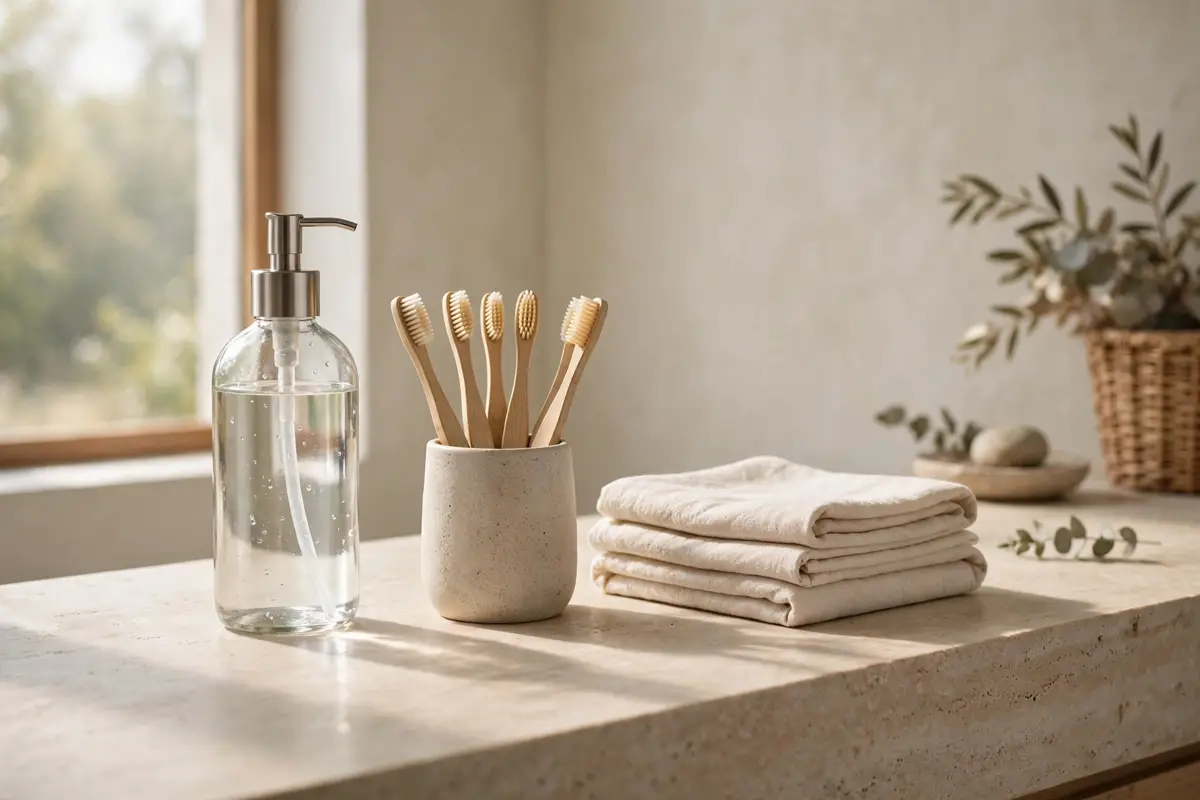
Sustainable beauty is about making beauty choices that reduce waste, use resources more thoughtfully and last longer, without giving up products that work for you. If you want a routine that is kinder to the environment but still practical, this guide explains what the term really means, how to judge products on more than their labels, and which small changes make the most sense in everyday life in the UK.
There is no single perfect product or routine. Instead, a more sustainable approach usually comes from a series of ordinary decisions. Choose well, use what you buy in full, and prefer packaging that can be refilled or recycled. Also, question claims that sound impressive but say very little. Taken together, those decisions matter more than chasing every new launch.
What Does Sustainable Beauty Mean?
At its simplest, sustainable beauty means considering the whole life of a product, not only how it performs on your skin or hair. That includes where its ingredients come from, how it is made and packaged, how long it lasts, and what happens to the container when it is empty. A product that is used fully and replaced less often can be a better choice than one bought on impulse and left half-finished in a drawer.
Four questions help to frame the idea. First, how are ingredients sourced, and is that sourcing explained clearly? Second, is the packaging proportionate and designed to be reused, refilled or recycled? Third, how much waste does the product create in normal use? Finally, how long is it genuinely useful before it needs replacing? No product will score perfectly on every point. However, asking the questions changes the buying decision from a quick reaction to a considered choice.
Sustainability in this context is also about lifespan. A well-made product that suits you, that you enjoy using and that you finish, supports a calmer routine. It reduces the cycle of buying, discarding and buying again. It also helps you spend on fewer, better-fitting items, rather than a shelf full of near duplicates.
Sustainable Cosmetics in Practice
Sustainable cosmetics are everyday make-up and personal care products designed and chosen with those wider effects in mind. In practice, that can mean a considered ingredients list, packaging that is not excessive, and a format that helps the product last. It can also mean buying a shade you will actually wear, in a size you will finish, from a brand that explains its choices in plain language rather than slogans.
Think about how cosmetics are used. A foundation, lipstick or powder that matches you well is more likely to be finished. In contrast, a product bought because it was trending, then set aside after a few uses, wastes both the formula and its packaging. That remains true however thoughtful its design may have been. Often, the most sustainable cosmetic is the one already in your make-up bag. Use it regularly, and replace it only when it is truly finished or no longer safe to use.
Choosing Better, Not Simply More
Before buying, check the basics. Look at the full ingredients list, clear directions for use, sensible storage advice and honest information about the packaging. Then look for products that solve a real gap in your routine. If you already own something similar, finish that first. This simple discipline does more for eco friendly beauty than adding another product with a green-looking label.
Sustainable Skincare Without the Hype
Sustainable skincare follows the same principle. Build a shorter, consistent routine around products your skin tolerates, and use them as directed. Cleanser, moisturiser and sun protection form the core for many people. Add extra steps only for a clear reason. A routine with fewer, well-chosen products is easier to maintain and creates less waste. It also makes it easier to notice what is actually helping.
If hydration is your main concern, our guide to best hydrating skincare explores how to think about dewy, comfortable skin. Meanwhile, our round-up of organic skincare products is a useful starting point if you are comparing plant-based options. Neither replaces personal judgement, though. Check ingredients for your own needs, introduce one product at a time, and give it a fair trial before deciding it does not work.
How you use skincare matters too. Use the amount the label directs, rather than doubling up in the hope of faster results. Store products away from heat and direct sunlight where the label advises it, and close lids properly. These habits protect the formula and reduce the chance of a product spoiling early. As a result, a bottle or jar is more likely to deliver its full intended use.
Sustainable Beauty Packaging: Refills, Recycling and Less Waste
Packaging is one of the most visible parts of sustainable beauty packaging, and one of the easiest to improve. Good design uses no more material than the product needs. It protects the product properly, and it gives the container a clear next step after use. That next step might be refilling it, recycling it where local facilities accept it, or reusing it safely at home while it remains in good condition.
Refillable formats work best when the outer container is sturdy and easy to maintain as directed. You should also want to keep it. Refills should genuinely reduce material compared with buying a new container each time, not simply add another layer. When you shop, compare the whole purchase. Consider the container, the refill, any extra wrapping, and whether you are likely to keep using that same system.
Solid Formats and Concentrates
Solid formats, such as bars for cleansing or hair care, are another practical option to consider. So are concentrates, which you mix or use in small amounts. Because they are compact, they can reduce the need for larger packaging. They can also last well when you store them dry and follow the label. They do not suit everyone or every purpose, so treat them as a choice to trial, not a rule. If a solid or concentrated product works for you and replaces a bulkier alternative, it can be a sensible part of a lower-waste routine.
Eco Friendly Beauty Habits and Zero Waste Beauty
Eco friendly beauty is often less about a dramatic overhaul and more about habits. Finish products before replacing them, where it is safe to do so. Choose multi-use products when they genuinely suit you, such as a balm or colour product that can be used in more than one way. Keep a small, honest list of what you own, so you do not buy duplicates by accident.
- Finish one product before opening a similar one.
- Prefer multi-use products that suit your skin and style.
- Store products carefully, so they last as intended.
- Recycle empty, clean packaging where your council accepts it.
- Pause before buying, and check what you already own.
Zero waste beauty is best understood as a direction, rather than an absolute. Few routines produce literally no waste. Besides, aiming for perfection can lead to discarding usable products, which is wasteful in itself. Instead, use what you have and replace items thoughtfully when they run out. Separate packaging for recycling as advised locally, and avoid stockpiling. Progress comes from steady reduction, not from throwing away a working routine to start again.
Green Beauty and How to Spot Greenwashing
Green beauty is a broad, appealing label, but it has no single meaning on its own. A leaf on the packaging, a natural colour palette or words such as pure, clean or kind do not explain how a product was made. They also do not explain how it was packaged. That does not make every such product a poor choice. It simply means the claim needs evidence behind it. That is where sustainable beauty needs clear evidence, not decoration.
Vague Language and What to Ask
Greenwashing happens when marketing makes a product sound more environmentally responsible than the detail supports. Watch for vague language with no explanation. Also watch for selective claims that highlight one small feature, while ignoring packaging or lifespan. Imagery that suggests nature, without any specific information, is another sign to pause. Ask what exactly is being claimed, about which part of the product, and how you can verify it.
Genuine certification, in general terms, means something more specific. An independent body has checked a defined claim against a published standard. The brand can say which scheme it belongs to and what that scheme covers. A credible claim is specific, limited and checkable. It names the certified product or ingredient, rather than implying the whole brand is certified. It also does not stretch a small improvement into a sweeping promise.
Circular Beauty: Keeping Things in Use for Longer
Circular beauty applies the idea of a circular economy to beauty. Keep products and packaging in use for as long as possible. Then give materials a next use, rather than treating everything as disposable. Refill stations, where you bring a suitable container to be refilled, are one familiar concept. Take-back schemes, where a brand accepts its empty packaging back for recycling or reuse, are another.
Packaging designed for reuse supports this approach when it is durable, refillable and part of a system you will actually use. At home, circular thinking is simpler. Refill containers as intended, return empties through a scheme you trust, and choose formats that do not need to be thrown away after a single use. The aim is a longer, more useful life for each item.
Understanding the Beauty Carbon Footprint
The beauty carbon footprint is a way of thinking about the climate impact connected with a product across its life. Qualitatively, that includes growing or making ingredients, manufacturing and packaging. It also includes transporting products to shops or to your door, the water and energy used at home, and dealing with waste at the end. No single factor tells the whole story. Therefore, you should treat broad claims based on one feature with care. For sustainable beauty, that wider view is the point.
As a reader, the useful response is practical, rather than precise. Buy fewer products you do not need, and choose items you will finish. Group online orders where you can, and use products as directed. Each step reduces unnecessary impact, without requiring you to calculate anything. The footprint idea is most helpful as a reminder that every stage counts, not as a score to chase.
Practical Steps for a More Sustainable Beauty Routine in the UK
You do not need to replace everything at once. Start with what is already in your bathroom, and make the next purchase a better one. Sustainable beauty grows from these small, repeatable choices.
- Audit what you own, and note what you use most often.
- Finish open products before buying replacements, where safe.
- Simplify your routine to the steps you value and repeat.
- Choose refillable, recyclable or solid formats when they suit you.
- Read claims carefully, and look for specific, checkable detail.
- Check local recycling guidance for empties, as rules vary by area.
The same thinking travels well beyond beauty. If you are also reviewing your wardrobe, our article asking how do you feel about sustainable fashion? explores similar questions about buying less, choosing well and looking beyond labels. In both cases, the pattern is the same. Thoughtful choices, repeated consistently, beat short-lived enthusiasm.
Sustainable beauty is not about perfection or hype. It is about informed, realistic choices. Choose products you need, understand their ingredients and packaging, build habits that cut waste, and learn to question claims. Build those habits one replacement at a time. Your routine can then become simpler, calmer and more sustainable in a way that lasts.