Professional tyre services are an important part of keeping a vehicle safe, roadworthy and dependable throughout the year. Tyres are the only part of a car that remains in direct contact with the road, so their condition can affect braking, steering, handling and overall road safety.
For UK drivers, tyre care involves more than replacing a worn tyre. It can include regular inspections, pressure checks, tyre fitting, wheel alignment, balancing, puncture assessment and timely replacement. Understanding these services can help motorists identify problems earlier and make better maintenance decisions.
Why Tyre Services Matter for UK Drivers
Tyres gradually lose pressure, develop wear and can suffer damage through everyday driving. Potholes, kerbs, rough surfaces, heavy loads and long journeys can all contribute to tyre deterioration.
Regular tyre maintenance provides an opportunity to identify problems before they become more serious. A professional inspection can reveal uneven tread wear, visible damage, incorrect pressure or other issues that may affect how the vehicle behaves on the road.
Tyre condition also matters when driving in wet weather. Reduced grip can make braking and steering more difficult, particularly when a vehicle is travelling at speed or the road surface is contaminated with standing water.
What Do Tyre Services Include?
The term tyre services covers a range of tasks designed to keep tyres in suitable condition. The exact service required depends on the vehicle, tyre condition and symptoms experienced by the driver.
Tyre Inspections
A tyre inspection checks the general condition of the tyre, including tread, visible damage and signs of abnormal wear. Drivers should also pay attention to changes in handling, steering or road noise because these can sometimes indicate a tyre or wheel-related problem.
Visible cuts, cracks, bulges or other damage should not be ignored. If a tyre appears damaged, professional assessment is safer than assuming it can continue to be used normally.
Tyre Fitting
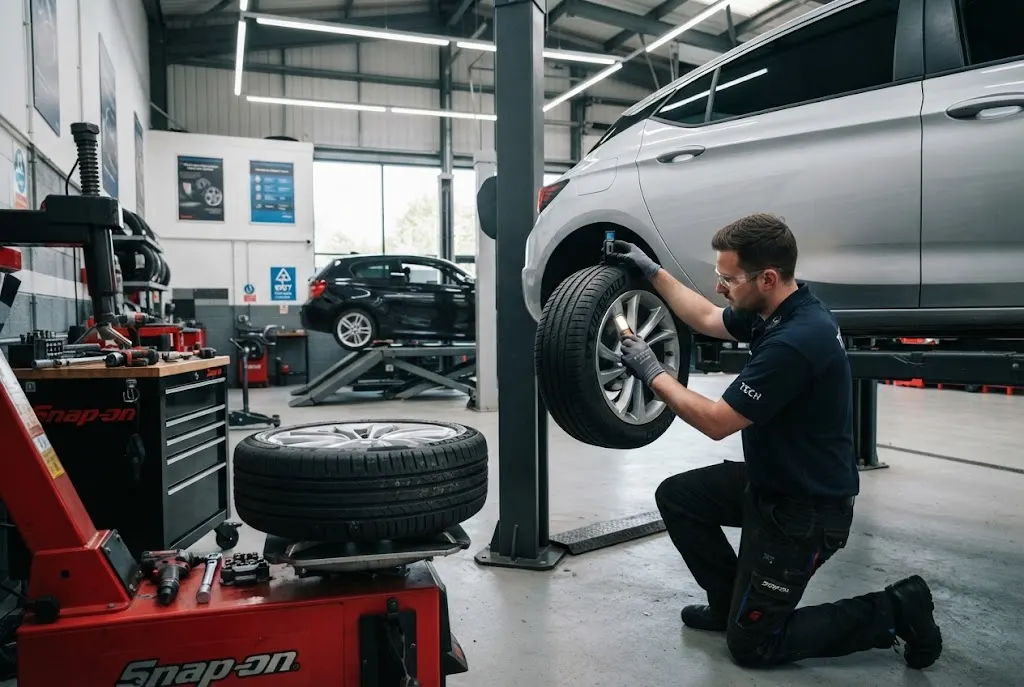
Tyre fitting involves removing an existing tyre and installing a replacement onto the wheel. Proper fitting is important because the tyre needs to be correctly mounted and inflated before the vehicle returns to the road.
Professional fitting can also include checking the wheel and valve condition and balancing the wheel assembly where necessary. This helps ensure the replacement tyre is installed correctly rather than simply swapped onto the vehicle.
Tyre Replacement
Tyre replacement may be necessary when a tyre has reached the end of its usable life, has significant damage or no longer provides an appropriate level of performance.
Drivers should not wait until a tyre becomes visibly unsafe before considering replacement. Excessive wear, repeated pressure loss or uneven tread patterns can all be reasons to have the tyre inspected.
Tyre Pressure Checks
Correct inflation is one of the simplest aspects of tyre maintenance. The recommended pressure should be taken from the vehicle manufacturer’s information rather than guessed from the appearance of the tyre.
GOV.UK advises drivers to check tyre pressures weekly and to carry out the check when tyres are cold, because warm tyres can produce a misleading pressure reading.
Tyre Safety and UK Legal Requirements
Tyre safety is both a maintenance responsibility and a roadworthiness issue. UK guidance states that car, light van and light trailer tyres generally require at least 1.6 mm of tread across the central three-quarters of the tread and around the entire circumference. Tyres must also be correctly inflated and free from certain cuts and defects.
The legal minimum should not necessarily be treated as the ideal point at which to start thinking about replacement. Drivers should monitor tread condition and overall tyre health regularly rather than waiting until the legal threshold becomes the only concern.
For the current official requirements and vehicle safety guidance, motorists can consult the GOV.UK Highway Code guidance on vehicle maintenance, safety and security.
Signs You May Need Tyre Services
Some tyre problems are easy to spot, while others appear through changes in how the vehicle drives. Knowing the warning signs can help drivers arrange an inspection before a minor issue develops into a larger problem.
- Uneven or unusually rapid tread wear
- Visible cuts, cracks or bulges
- Repeated loss of tyre pressure
- Vibrations through the steering wheel
- The vehicle pulling to one side
- Steering that feels different from normal
- Unusual road noise
- Reduced grip in wet conditions
- A tyre approaching or below the legal tread requirement
Not every symptom is caused by the tyre itself. Problems involving suspension, steering, brakes, wheels or alignment can also produce similar signs. That is why professional diagnosis can be useful when the cause is unclear.
Tyre Services and Wheel Alignment
Tyres and wheel alignment are closely connected. If the wheels are not correctly aligned, tyres may wear unevenly and the vehicle may develop steering symptoms.
For example, a driver may notice that the steering wheel is no longer centred while travelling straight or that one side of a tyre is wearing more quickly than the other. These symptoms should be investigated rather than solved simply by fitting another tyre.
Our wheel alignment guide explains how alignment differs from balancing and highlights common warning signs that UK drivers should understand.
How Often Should You Check Your Tyres?
There is no single inspection schedule that suits every driver. A vehicle covering high annual mileage may require more frequent checks than one used occasionally for short journeys.
However, tyre pressure should be checked regularly, and drivers should visually inspect their tyres before longer journeys. It is particularly sensible to check them when carrying heavier loads or preparing for a significant road trip.
Regular checks should include the visible tread, sidewalls, inflation pressure and any unusual changes since the previous inspection. If something looks different or the vehicle’s handling changes, arrange an appropriate inspection.
Tyre Maintenance Before a Long Journey
Long journeys place additional demands on tyres because they may remain at motorway speeds for extended periods. Before setting off, drivers should check that the tyres are correctly inflated for the intended load and inspect them for obvious damage or excessive wear.
The spare wheel or emergency tyre equipment should also be checked where applicable. Drivers who rely on a tyre repair kit should understand how it works before they need to use it.
It is also worth considering the condition of the vehicle’s wheels and alignment. A tyre problem that becomes noticeable during a long journey can be inconvenient and potentially dangerous, particularly on busy roads.
Tyre Replacement: What Should Drivers Consider?
Choosing replacement tyres involves more than selecting the cheapest available option. Drivers should ensure that the replacement is suitable for the vehicle and appropriate for its intended use.
Tyre size, load requirements and speed ratings should be checked against the vehicle manufacturer’s specifications. Where replacement tyres are being fitted, it is also sensible to ask whether the existing wheels, valves and other relevant components require inspection.
Drivers should also consider whether the tyres are being replaced because of normal wear or because another vehicle fault caused the damage. If uneven wear is the reason for replacement, simply fitting new tyres may not resolve the underlying problem.
Why Preventive Maintenance Can Save Trouble
Preventive maintenance means dealing with potential issues before they develop into failures. Tyres are a good example because small changes can sometimes provide an early indication of a wider mechanical problem.
For instance, uneven wear could be linked to alignment, suspension or steering issues. Repeated pressure loss could indicate a puncture, valve problem or wheel-related issue. Addressing the cause early can help prevent unnecessary disruption later.
This approach also fits into broader vehicle maintenance. Our guide to garage chains can help drivers understand the different types of automotive service providers available when a vehicle requires inspection or repair beyond routine tyre work.
Tyre Services for Different Types of Vehicles
Tyre requirements can vary depending on the vehicle. A small city car, family SUV, performance vehicle, van and electric vehicle may all have different tyre specifications and operating demands.
Electric vehicles can be particularly demanding because of their weight and instant torque characteristics. Owners should follow the vehicle manufacturer’s tyre specifications and use a provider that understands the requirements of the vehicle.
Similarly, vehicles used for frequent motorway journeys, towing or carrying heavy loads may require particularly careful attention to tyre condition and inflation.
Choosing a Professional Tyre Service Provider
When selecting a provider, price is only one factor. Drivers should consider whether the business has suitable equipment, trained technicians and experience with their particular vehicle.
Before booking, ask what is included in the quoted price. Depending on the service, this could include tyre fitting, balancing, valve replacement, disposal of old tyres and pressure checks.
It is also useful to ask how the provider handles additional problems. If the technician discovers damaged wheels, alignment problems or suspension issues during a tyre appointment, the driver should receive a clear explanation before authorising additional chargeable work.
Questions to Ask Before Booking Tyre Services
A few simple questions can make it easier to compare providers and understand what you are paying for.
- Is the tyre suitable for my vehicle?
- Does the quoted price include fitting?
- Is wheel balancing included?
- Will the valve and wheel condition be checked?
- Can you inspect the vehicle for uneven tyre wear?
- Could alignment or suspension problems be causing the wear?
- What happens if the tyre cannot be safely repaired?
- Will the old tyre be disposed of appropriately?
Clear answers can help drivers make a more informed decision and avoid unexpected costs.
Tyre Services and Road Safety
Tyres play a direct role in how a vehicle accelerates, brakes and changes direction. Their condition becomes even more important when road surfaces are wet, slippery or uneven.
The Highway Code advises drivers to take extra care in wet conditions because tyres have less grip and stopping distances can increase significantly. Maintaining suitable tyre condition is therefore an important part of responsible driving.
Drivers should also remember that having a valid MOT does not remove their responsibility to keep the vehicle roadworthy between inspections. Regular checks remain an important part of vehicle ownership.
When Should You Seek Professional Advice?
Professional advice is appropriate whenever a tyre appears damaged, repeatedly loses pressure or shows unusual wear. It is also sensible to seek assistance when a vehicle develops vibration, steering changes or other symptoms that may be related to the tyres or wheels.
Do not assume that a new tyre is always the solution. A professional inspection can determine whether the issue is actually related to alignment, suspension, brakes, steering or another component.
Taking action early can help drivers avoid unnecessary tyre damage and reduce the risk of a problem becoming more disruptive.
Frequently Asked Questions About Tyre Services
What are tyre services?
Tyre services include tyre inspections, fitting, replacement, pressure checks, balancing and other work related to tyre condition and wheel performance. The exact service depends on the vehicle and the issue being addressed.
How often should tyre pressure be checked?
GOV.UK guidance advises drivers to check tyre pressures weekly and to do so when the tyres are cold. Drivers should use the pressure recommended by the vehicle manufacturer.
What is the legal tyre tread depth in the UK?
For cars, light vans and light trailers, the general legal minimum is 1.6 mm across the central three-quarters of the tread and around the entire circumference. Other vehicle categories can have different requirements.
Can uneven tyre wear indicate another problem?
Yes. Uneven wear can be associated with wheel alignment, suspension, braking or other vehicle issues. If a tyre is wearing unusually, the underlying cause should be investigated.
Should I replace a tyre when it reaches the legal limit?
The legal minimum is not a target for delaying maintenance. Drivers should monitor tyre condition regularly and consider replacement when wear, damage or performance indicates that the tyre should no longer be used.
Is professional tyre fitting necessary?
Professional fitting can help ensure that the tyre is correctly mounted, inflated and balanced where required. It also provides an opportunity to identify problems with the wheel, valve or related components.
Final Thoughts
Good tyre care is an essential part of responsible vehicle ownership. Regular inspections, correct inflation, timely tyre fitting and appropriate replacement can all contribute to safer and more dependable driving.
Rather than waiting for a tyre problem to become obvious, UK motorists should make tyre checks part of their normal preventive maintenance routine. When unusual wear, damage, pressure loss or steering symptoms appear, professional assessment can help identify the cause.
Ultimately, effective tyre services are not simply about fitting new rubber to a wheel. They are about maintaining the connection between the vehicle and the road, supporting road safety and helping drivers make informed decisions about their vehicles throughout their ownership.