
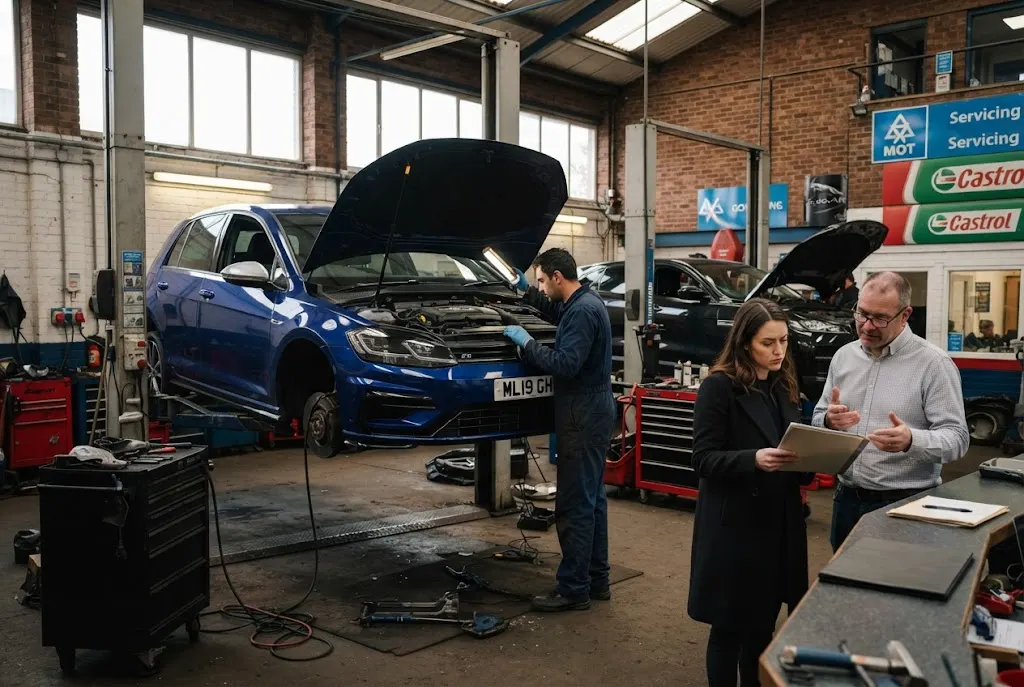
Unexpected vehicle repairs can put pressure on a household budget, particularly when a car is essential for commuting, family responsibilities or everyday travel. Repair finance can be one option for motorists who need to manage a significant repair bill without paying the entire amount immediately.
However, financing a repair is a financial commitment and should be considered alongside other options. Understanding repair costs, payment plans, maintenance expenses and the total amount repayable can help UK drivers make a more informed decision when an unexpected vehicle problem occurs.
What Is Repair Finance?
Repair finance generally refers to arrangements that allow a customer to spread the cost of vehicle repairs over a period rather than paying the entire bill upfront. Depending on the provider and arrangement, repayment may be divided into regular instalments.
The exact terms can vary significantly. Interest, fees, repayment periods, eligibility requirements and other conditions should therefore be checked carefully before agreeing to any finance arrangement.
Repair finance should not be confused with routine vehicle maintenance. Servicing and preventive maintenance can help reduce the likelihood of major unexpected expenses, while finance is a method of managing the cost when an expense has already arisen.
Why Vehicle Repair Bills Can Be Difficult to Budget For
Regular vehicle expenses are generally easier to anticipate. Drivers can plan for fuel, insurance, tax, servicing and other recurring costs. Unexpected repairs are different because their timing and cost can be difficult to predict.
A vehicle may require an unexpected repair because of component wear, mechanical failure, electrical faults, accident damage or other issues. The final bill can depend on the vehicle, parts required, labour time and complexity of the problem.
Older vehicles can also present different budgeting challenges from newer cars. As vehicles accumulate mileage, more components may eventually require attention, although the timing of individual repairs cannot be predicted with certainty.
Repair Finance and Maintenance Plans Are Different
It is important to distinguish between repair finance and maintenance plans. A maintenance plan is generally designed around scheduled vehicle care, while repair finance is concerned with funding a repair or unexpected cost.
A maintenance plan may cover certain scheduled servicing or maintenance items according to its terms. It does not necessarily cover every mechanical or electrical failure.
Before purchasing a maintenance plan, drivers should read exactly what is included, what is excluded and whether there are mileage, vehicle-age or other restrictions.
When Might Repair Finance Be Considered?
Repair finance may be considered when a necessary repair creates a significant immediate expense and the driver does not want or cannot afford to pay the full amount at once.
For example, a major mechanical repair may cost considerably more than a routine service. If the vehicle is otherwise suitable for continued ownership, spreading the cost may appear preferable to replacing the car immediately.
However, financing should not automatically be viewed as the best solution. Drivers should first understand the repair, its cost and whether repairing the vehicle makes financial sense in the context of its age, condition and expected future expenses.
Understanding Repair Payment Plans
Repair payment plans can differ in structure. Some may allow a repair bill to be divided into instalments, while others may involve a separate credit arrangement.
Before agreeing to a payment plan, drivers should establish:
- The total amount being financed.
- The deposit or upfront contribution, if applicable.
- The repayment period.
- The regular payment amount.
- The interest rate or applicable charges.
- The total amount repayable.
- Any additional fees or penalties.
- What happens if a payment is missed.
The monthly payment alone does not tell you how expensive a finance arrangement is. The total amount repayable is particularly important when comparing different options.
Calculate the Total Cost Before Agreeing
One of the most useful budgeting tips is to look beyond the monthly figure. A payment that appears affordable each month can still result in a substantial total cost over a longer repayment period.
For example, imagine a repair costs £1,500. If a finance arrangement spreads the cost over several months, the customer should compare the total amount repaid with the original repair bill.
Ask the provider to explain the full cost in straightforward terms. If there are interest charges or fees, make sure you understand how they affect the final amount.
Repair Finance vs Paying From Savings
Drivers with accessible savings may compare financing a repair with paying the bill directly. There is no universal answer because the right choice depends on the individual’s financial circumstances and the terms available.
Paying from savings can avoid borrowing costs, but using a large portion of an emergency fund may leave less money available for future unexpected expenses.
Finance can preserve available cash in some circumstances, but it creates a repayment obligation and may cost more than the original repair.
A sensible comparison should therefore consider both the immediate cash position and the longer-term financial impact.
Repair Finance vs Replacing the Vehicle
A large repair bill can sometimes make a driver question whether the vehicle should be replaced instead. This decision should be based on the vehicle’s overall condition rather than the repair bill alone.
Consider the car’s age, mileage, service history, current condition and likely future maintenance requirements. Also consider the costs associated with acquiring another vehicle, including its purchase price, financing, insurance and ongoing running expenses.
A substantial repair does not automatically mean that a vehicle is no longer economical to own. Equally, financing repeated major repairs on a vehicle with ongoing problems may not be a sustainable long-term strategy.
How Preventive Maintenance Can Reduce Unexpected Costs
Preventive maintenance is one of the most effective ways to manage vehicle ownership expenses over time. It cannot prevent every mechanical failure, but regular servicing and inspections can help identify developing issues.
Drivers should follow the manufacturer’s maintenance recommendations and pay attention to warning signs between services. Unusual noises, warning lights, fluid leaks, changes in handling or reduced performance should not simply be ignored.
Tyres are another important part of preventive maintenance. Our tyre services guide explains how inspections, correct pressure, tyre fitting and timely replacement can support vehicle safety and maintenance.
Servicing Costs and Long-Term Budgeting
Regular servicing costs should form part of a realistic vehicle budget. Drivers can review previous invoices to identify recurring maintenance expenses and use them as a starting point for future planning.
It is also worth keeping some money available for less predictable expenses. A vehicle budget that only accounts for fuel and scheduled servicing may leave little room for unexpected repairs.
Planning for maintenance does not mean predicting exactly when a component will fail. Instead, it means recognising that vehicle ownership involves both predictable and unpredictable costs.
How Vehicle Age Can Affect Repair Budgeting
Vehicle age is one factor that can influence repair planning, although age alone does not determine whether a car is reliable or economical.
A well-maintained older vehicle can continue providing useful service, while a newer vehicle can still experience an expensive fault. The important point is to consider the vehicle’s complete condition rather than relying on age as the only measure.
Service history, mileage, previous repairs and the condition of major components can all provide useful context when deciding how much money to set aside for future maintenance.
Questions to Ask a Garage About a Major Repair
Before arranging finance for a significant repair, drivers should understand exactly what needs to be fixed.
- What is the confirmed fault?
- How was the fault diagnosed?
- Which parts need replacing?
- Is the repair urgent?
- What is the complete estimated cost?
- Are there alternative repair options?
- What warranty or guarantee applies to the work?
- Are there other known issues that could require attention soon?
These questions can help separate an essential repair from additional work that may be recommended but is not immediately necessary.
Compare Repair Quotes Before Financing
If the repair is not an emergency, obtaining more than one quotation can help establish whether the proposed cost is reasonable. Quotes should be compared carefully because different garages may include different parts, labour and diagnostic work.
A lower quotation is not automatically better. Drivers should consider the quality and specification of parts, the experience of the workshop, warranty terms and what exactly is included.
Once the repair cost is understood, it becomes easier to determine whether finance is appropriate and how much would actually need to be borrowed.
Financial Planning for Vehicle Ownership
Financial planning for a vehicle should extend beyond the purchase price. Fuel, insurance, road tax where applicable, servicing, tyres, repairs and depreciation can all contribute to the overall cost of ownership.
Creating a dedicated vehicle budget can make unexpected expenses easier to handle. Drivers can review annual costs and set aside an amount regularly rather than waiting for a major repair to create financial pressure.
For larger vehicle-related financial commitments, understanding the wider cost of ownership is particularly important. A low monthly vehicle payment does not necessarily mean that the vehicle is inexpensive to own.
How Repair Finance Fits Into Ownership Expenses
Repair finance should be viewed as one possible tool within a broader vehicle budget. It does not reduce the actual cost of a repair; it changes when and how the customer pays for it.
This distinction is important. A driver may find that spreading a repair cost makes the immediate expense easier to manage, but the resulting monthly commitment needs to fit comfortably alongside household bills and other financial obligations.
Before committing, consider whether the repayment will remain manageable if other unexpected expenses arise during the same period.
Be Careful With Long Repayment Periods
A longer repayment period can reduce the size of individual payments, but it may increase the overall cost depending on the terms of the finance arrangement.
Drivers should therefore avoid choosing a repayment period based solely on the smallest monthly payment. Instead, compare the monthly amount, repayment length and total amount payable together.
If the finance terms are unclear, ask the provider to explain them before signing an agreement.
What If the Vehicle Needs Repeated Repairs?
Repeated repairs can change the financial calculation. If a vehicle requires major work frequently, financing each repair separately may not address the underlying ownership problem.
Keep records of significant repairs and review the total amount spent over time. This can help identify whether the vehicle remains financially sensible to keep.
It can also be useful to ask a trusted technician for an honest assessment of the vehicle’s general condition and whether other major components are approaching the end of their expected service life.
Repair Finance and Vehicle Safety
Financial considerations should never encourage a driver to continue using a vehicle that is unsafe. If a repair involves brakes, steering, tyres, suspension or another safety-critical system, the vehicle should be assessed appropriately before continued use.
The Highway Code and official UK vehicle safety guidance provide information about maintaining vehicles in a safe and roadworthy condition. Drivers should take warning signs seriously and seek professional assistance when necessary.
How to Build a Vehicle Repair Fund
A dedicated repair fund can provide an alternative to borrowing for smaller or moderate unexpected expenses. Drivers can contribute a manageable amount regularly and allow the balance to build over time.
The amount required will depend on the vehicle, driving habits and personal budget. There is no universal figure that works for every household.
The main benefit is predictability. When an unexpected repair occurs, some of the cost may already be available rather than needing to be financed immediately.
Practical Budgeting Tips for UK Drivers
- Keep records of servicing and repair expenses.
- Budget for routine maintenance as well as unexpected repairs.
- Check tyre condition and pressure regularly.
- Investigate warning lights and unusual vehicle behaviour promptly.
- Compare repair quotations where time allows.
- Ask for the total repair cost before approving major work.
- Compare the total repayment cost of finance rather than only monthly payments.
- Review whether an older vehicle remains economical to maintain.
- Keep an emergency fund where possible.
- Read finance terms carefully before signing an agreement.
Frequently Asked Questions About Repair Finance
What is repair finance?
Repair finance is a way of spreading the cost of an eligible vehicle repair over an agreed repayment period rather than paying the complete amount immediately. The terms, interest and fees depend on the provider and agreement.
Is repair finance cheaper than paying upfront?
Not necessarily. Financing can make the immediate expense easier to manage, but interest and fees may mean that the total amount repaid is higher than the original repair cost.
Should I finance a repair on an older car?
It depends on the vehicle’s overall condition and expected future costs. Consider its age, mileage, service history, recent repairs and the likelihood of further major expenses before making a decision.
Are maintenance plans the same as repair finance?
No. Maintenance plans generally relate to specified scheduled servicing or maintenance, while repair finance concerns how an existing repair cost is paid. The exact coverage of any plan depends on its terms.
Can preventive maintenance reduce repair costs?
Preventive maintenance can help identify developing problems and may reduce the likelihood of some avoidable failures. It cannot eliminate the risk of unexpected repairs, but regular inspections and servicing are important parts of responsible vehicle ownership.
What should I check before accepting a repair payment plan?
Check the repayment period, regular payment, interest or charges, total amount repayable, upfront costs, late-payment terms and any other conditions. Make sure the arrangement fits your wider budget.
Final Thoughts
Repair finance can provide a way to spread a significant vehicle repair cost, but it should be considered as part of a wider financial decision rather than a quick solution to an unexpected bill.
Understanding the repair, comparing quotations, reviewing the vehicle’s condition and calculating the total finance cost can help drivers make a more informed choice. At the same time, preventive maintenance and sensible budgeting can reduce the financial impact of some unexpected vehicle expenses.
For UK motorists, the most sustainable approach is to consider the complete ownership picture. Regular servicing, tyre care, emergency savings and careful financial planning can all contribute to keeping vehicle ownership manageable while ensuring essential repairs are not unnecessarily delayed.