
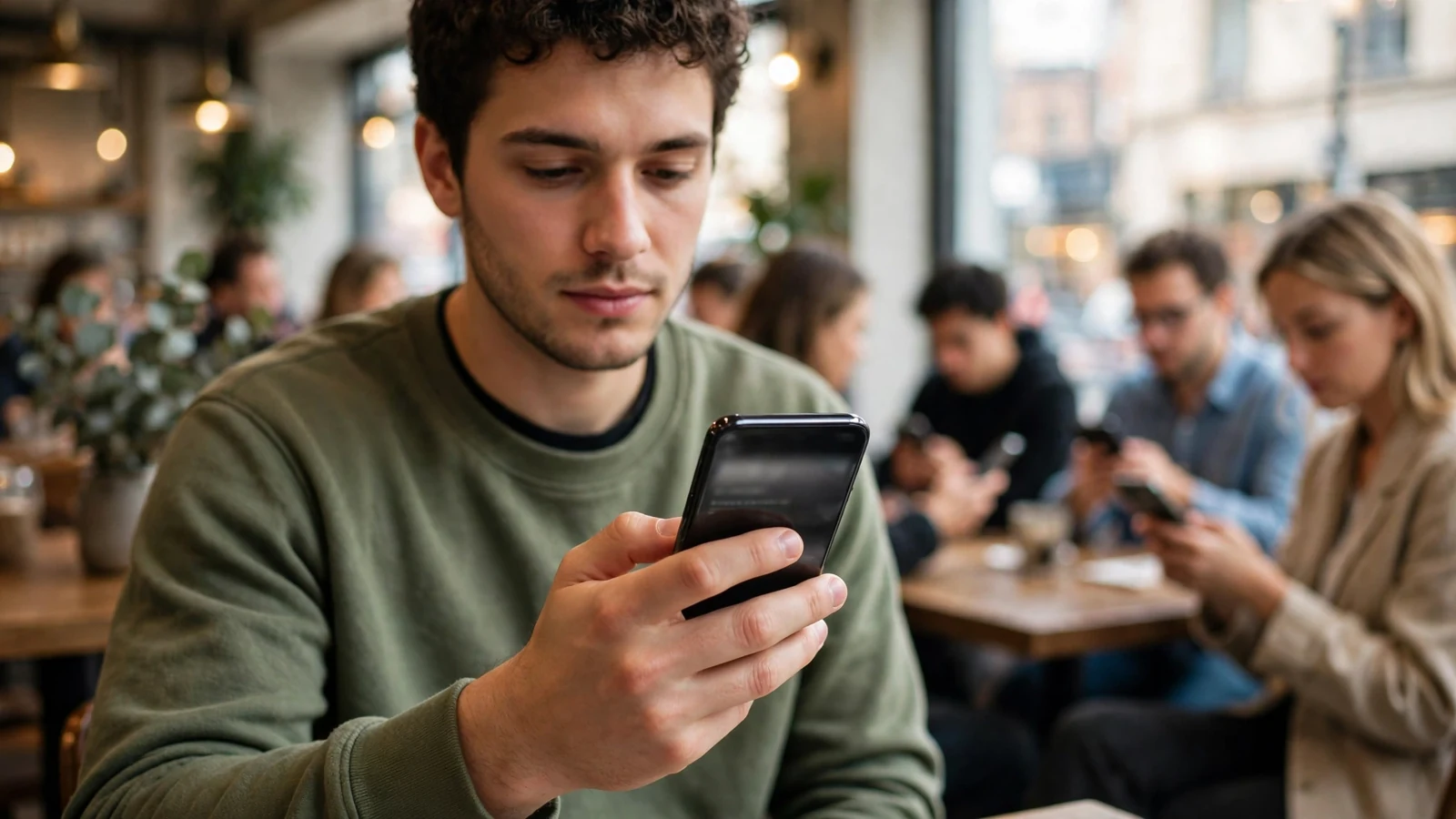
It is easy to forget that smartphones are still a young invention. In less than two decades, the mobile phone has grown from a device for calls and short text messages into the main computer most of us own — the thing we reach for when we wake up, carry through the working day and check last thing at night. Smartphones now sit at the centre of how we communicate, work, travel, shop, pay and relax — and few people predicted how completely they would take over daily life.
Communication Without Distance
The most obvious change is how we talk to each other. A phone call used to be an event: you sat by the landline, or paid close attention to the cost of a long-distance call. Today a video call with family on another continent is free, instant and unremarkable. Messaging apps have replaced the short text with an ongoing conversation that never really ends — photos, voice notes, locations and links shared in a few taps. Group chats now organise everything from family birthdays to five-a-side football.
There is a trade-off: being reachable at all times can blur the line between being in touch and being on call, and a quick message is not always a substitute for a real conversation. But distance matters far less than it used to, and keeping up with people no longer depends on sharing a place, or even a time zone.
The Office in Your Pocket
Work has been reshaped just as thoroughly. Email, documents, spreadsheets, video meetings and project tools all live on the same small screen, which means the office is wherever you happen to be — a train carriage, a kitchen table or a hotel room. For tradespeople, drivers, carers and other people whose work was never desk-based, the smartphone is often the main business tool they own: it takes bookings, sends invoices, navigates to the next job and accepts payment at the end of it.
Businesses have had to adapt to customers who live on their phones, too. Shops, restaurants and services are discovered, compared and reviewed through a handset long before a customer walks through the door, which is why the global impact of digital marketing on buying habits has been so far-reaching. The phone is no longer just a way to contact a business; for many customers, it is the business’s front door.
A Camera That Is Always With You
Ask what people actually do with their phones and photography is near the top of the list. The old saying that the best camera is the one you have with you turned out to be true: because the phone is always in a pocket, it captures the moments a dedicated camera would have missed. Modern phone cameras use clever software to handle low light, portraits and zoom in ways that once needed expensive equipment and real skill.
That has changed how memories are kept. Family history now lives in a camera roll rather than a shoebox of prints, and everyday moments — a child’s first steps, a striking sunset, a meal worth remembering — are recorded and shared within seconds. The urge to photograph everything can, of course, compete with simply enjoying it.
Finding Your Way Anywhere
Navigation may be the most quietly revolutionary change of all. Paper maps, printed route planners and asking strangers for directions have largely given way to live maps that know where you are, where you are going and what the traffic is doing in between. A wrong turn is no longer a disaster; the route simply recalculates. For drivers the same apps report roadworks and delays, and for walkers they have opened up footpaths and unfamiliar cities with confidence.
Travel planning has moved onto the phone as well. Flights, hotels, restaurant tables and attraction tickets are researched and booked from the sofa, and boarding passes live in a digital wallet. Anyone planning a road trip through the best places to visit in California or working through the top places to visit in the North East USA will likely do most of the organising, navigating and photographing on a single device — a job that once needed a guidebook, a map, a camera and a travel agent.
Money, Shopping and Everyday Errands
The phone has also become a wallet. Contactless payments, banking apps and instant transfers mean many people now leave home with nothing but their handset. Balances can be checked in seconds, bills are paid from the sofa, and a lost card can be frozen from the app before the bank’s helpline would even have answered. Shopping has followed the same path: prices compared in the aisle, reviews checked before buying, and groceries ordered for the evening on the way home.
The same apps increasingly run the objects around us. Drivers manage charging, servicing and even unlocking their cars from the phone — a shift we explore in our guide to electric vehicle ownership — while at home the handset controls heating, lighting, doorbells and appliances. Even the way we style and organise our rooms is researched on a screen first, whether the project is a full refit or simply choosing black kitchen accessories to finish a modern scheme. The smartphone has become a remote control for everyday life.
Health, Habits and the Attention Trade-Off
Phones have moved into health and fitness too. They count steps, log runs, track sleep and store workout plans, and paired watches add heart-rate and other measurements throughout the day. For many people, that gentle feedback loop — a ring to close, a streak to keep — is the nudge that gets them out of the door. Health apps also help people manage appointments, prescriptions and conditions, putting information that once lived in a filing cabinet into the patient’s own hands.
The balance, of course, is attention. The same device that guides a run also delivers an endless stream of notifications, headlines and short videos designed to hold the eye. Most people recognise the pattern of picking up the phone for one thing and surfacing half an hour later. The healthiest relationship with the technology seems to be a deliberate one: using the tools the phone itself provides — notification controls, downtime settings, app timers — to keep the device working for its owner rather than the other way round.
What Is Changing Now
The transformation has not stopped. The newest phones are built around on-device artificial intelligence: features that summarise long messages, tidy up photographs, translate conversations and organise the day increasingly run on the handset itself rather than in a distant data centre, which makes them faster and more private. Screens that fold, batteries that last longer and cameras that keep closing the gap on dedicated equipment continue to blur the line between phone and computer.
What is unlikely to change is the phone’s central place in daily life. Smartphones succeeded because they gathered dozens of single-purpose objects — telephone, camera, map, wallet, diary, music player, torch — into one slab of glass that is always within reach. Whatever the next generation adds, it builds on a device that has already changed how we live more completely than almost any modern invention.