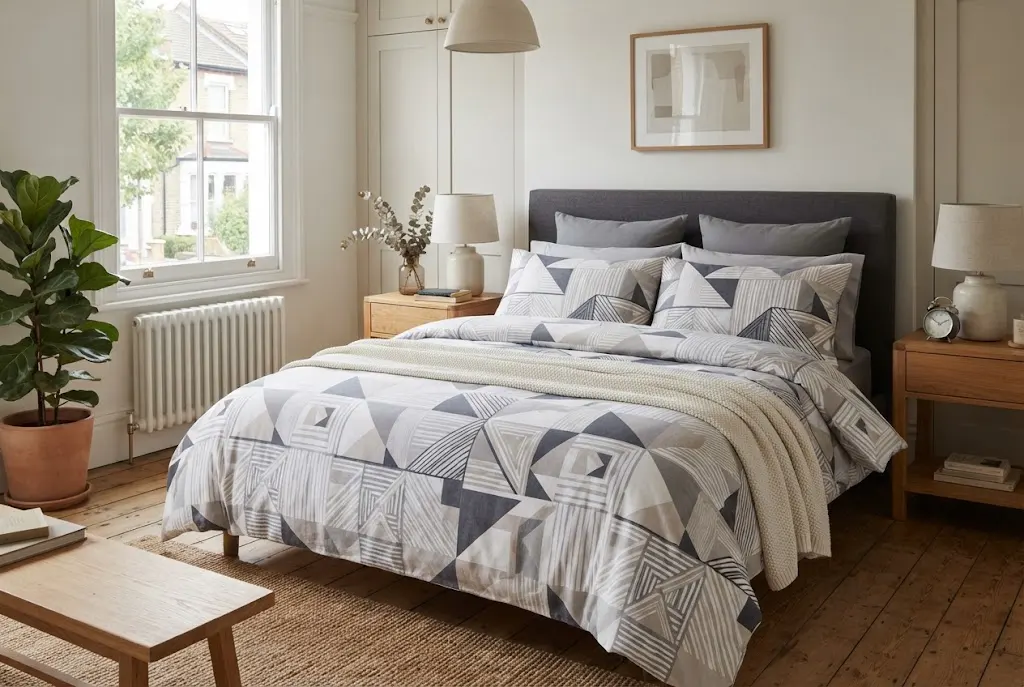
Geometric bedding is an easy way to give a bedroom a fresh, contemporary look without changing the entire space. From subtle lines and repeating shapes to bold diamonds, grids and abstract patterns, the right design can become the visual centre of a room while still feeling comfortable and inviting. Whether you are updating a master bedroom, guest room or smaller UK bedroom, geometric bedding offers plenty of flexibility for creating a polished interior.
The key is to choose a pattern that works with the size, colour palette and existing décor of the room. A carefully selected duvet cover can introduce personality, while plain sheets, cushions and throws can keep the overall look balanced. With the right combination, geometric patterns can feel sophisticated rather than overwhelming.
Why Choose Geometric Bedding?
Geometric bedding works particularly well when you want to introduce pattern without relying on floral or traditional motifs. Straight lines, triangles, circles, diamonds, squares and abstract shapes can create a distinctly modern appearance while remaining versatile enough to suit different decorating styles.
One of the biggest advantages is the range of visual effects available. Small repeating shapes can create a restrained appearance, while larger geometric designs make a stronger statement. This makes it possible to find a pattern that suits both minimalist bedrooms and more expressive interiors.
Geometric bedding can also help bring different colours together. If your bedroom already includes several shades through walls, flooring or furniture, a patterned duvet cover can incorporate those tones and make the room feel more coordinated.
How to Choose Geometric Bedding for Your Bedroom
Choosing the right design is about more than simply picking a pattern you like. Consider the proportions of your bedroom, the colours already present and how much visual interest you want around the bed.
Consider the Size of the Pattern
Large geometric shapes tend to attract attention quickly. They can work well in spacious bedrooms where the pattern has enough room to breathe. Smaller bedrooms may benefit from finer patterns that add detail without making the bed appear visually crowded.
If the bed is already the main focal point, a medium-scale geometric design can provide enough personality without dominating every other feature in the room.
Match the Colour Palette
Colour plays a major role in how geometric bedding feels. Neutral combinations such as white, grey, beige and charcoal can create a calm contemporary bedroom. Deeper navy, green or burgundy tones can make the room feel richer, particularly during autumn and winter.
If you prefer a brighter interior, consider geometric patterns featuring muted blue, terracotta, mustard or soft green. These shades can add warmth while maintaining a modern appearance.
Think About the Rest of the Room
Geometric bedding does not need to match every item in the bedroom. Instead, aim for visual coordination. For example, a patterned duvet cover can be paired with a plain upholstered headboard and simple bedside furniture.
When the bedding has a particularly strong pattern, keeping other large surfaces relatively understated can prevent the room from feeling busy.
Geometric Bedding and Modern Bedroom Styles
One reason geometric bedding remains versatile is that it can work with several interior styles. The same basic pattern can look completely different depending on the surrounding furniture, colours and accessories.
Minimalist Bedrooms
For a minimalist bedroom, choose geometric bedding with a limited colour palette. Black and white grids, subtle grey lines or simple repeating shapes can introduce pattern while preserving a clean appearance.
Pair the bedding with uncluttered furniture, plain curtains and a small number of carefully chosen accessories. This approach allows the pattern to provide interest without compromising the simplicity of the room.
Contemporary Bedrooms
Contemporary bedding often combines modern colours with distinctive patterns, making geometric designs a natural choice. Try a duvet cover featuring angular shapes, overlapping lines or an abstract arrangement.
Metallic bedside lamps, smooth furniture finishes and neutral walls can complement the pattern. However, avoid adding too many competing prints around the bed.
Scandinavian-Inspired Rooms
Geometric patterns can also suit Scandinavian-inspired interiors. Look for simple designs in soft grey, white, cream, muted blue or natural tones.
Wooden furniture, textured throws and soft lighting can make the overall bedroom feel warm and relaxed. The geometric pattern then adds structure without taking away from the understated character of the space.
How to Style Geometric Bedding
The bedding itself is only the starting point. Layering can make the bed look more considered and give the bedroom a finished appearance.
Use Plain Sheets as a Base
Plain sheets are one of the easiest ways to balance patterned bedding. White, cream, grey or another colour taken directly from the geometric design can create a cohesive foundation.
Using plain sheets also gives you more freedom to change cushions and throws without creating too many competing patterns.
Add Textured Throws
A textured throw can soften the sharper visual character of geometric patterns. Chunky knits, quilted throws and soft woven fabrics can introduce tactile interest while making the bed look more inviting.
For colder months, richer textures can work particularly well. If you are creating a seasonal bedroom, you could also build the look around burgundy bedding ideas for a warmer and more autumnal colour direction.
Layer Decorative Pillows
Pillows can help break up a large geometric duvet pattern. Start with larger plain pillows at the back, then introduce one or two patterned or textured options towards the front.
If you want to explore different ways to finish the bed, decorative pillows can add another layer of colour, texture and personality without requiring a major bedroom makeover.
Geometric Bedding Colour Ideas
There is no single colour combination that defines geometric bedding. Instead, choose a palette based on the atmosphere you want to create.
- Black and white: A classic combination for crisp, minimalist and contemporary rooms.
- Grey and white: A softer alternative that works well with neutral furniture.
- Navy and cream: A sophisticated combination that adds depth without becoming too dramatic.
- Green and beige: A natural-looking palette that works particularly well with wooden furniture.
- Burgundy and neutral tones: A richer combination suited to cosy autumn and winter bedrooms.
- Terracotta and cream: A warm option for bedrooms that need a little more colour.
When choosing colours, consider how the bedroom looks throughout the day. Natural daylight can make colours appear different from how they look under warm lamps in the evening, so it is worth considering the room’s lighting before committing to a strong palette.
How to Keep Patterned Bedding Balanced
Patterned bedding can become overwhelming when several other patterns compete for attention. The easiest solution is to create a clear hierarchy.
Let the duvet cover provide the main pattern, then use smaller details to complement it. Plain curtains, a simple rug and understated furniture can create enough visual space around a statement bed.
If you want additional patterns, repeat one of the geometric colours in a smaller accessory rather than introducing an entirely unrelated print. This creates continuity without making the bedroom look overly coordinated.
Geometric Bedding for Different Seasons
One advantage of choosing geometric bedding is that the same pattern can be adapted throughout the year.
During spring and summer, lighter colours and breathable-looking fabrics can create a fresher atmosphere. Soft blue, cream, white and muted green can make the bedroom feel bright and airy.
As temperatures fall, deeper shades and heavier-looking layers can make the room feel more inviting. Burgundy, charcoal, forest green and warm brown can all work well with geometric designs.
This seasonal approach means you do not necessarily need to replace every element of your bedroom décor. Changing the duvet cover, throw and a few accessories can be enough to give the room a noticeably different character.
Geometric Bedding in Small UK Bedrooms
Smaller bedrooms require a little more consideration because the bed usually occupies a significant proportion of the available space. A carefully selected geometric pattern can still work beautifully, provided it does not create excessive visual clutter.
Choose designs with enough background space and avoid combining several large-scale patterns. Lighter colours can also help maintain an open appearance, while a limited palette can make the room feel more cohesive.
Mirrors, lighter walls and streamlined furniture can further support the effect. Rather than filling every available surface with accessories, allow the geometric bedding to provide most of the visual interest.
How to Create a Cosy Look with Geometric Bedding
Modern patterns do not have to make a bedroom feel cold. The right textures and accessories can balance the structured appearance of geometric designs.
Layer the bed with soft throws, tactile cushions and comfortable-looking fabrics. Warm bedside lighting can also soften the sharper lines of the pattern, particularly in the evening.
Natural materials such as wood, woven baskets and textured fabrics can provide contrast. The result is a bedroom that feels contemporary while still being comfortable and welcoming.
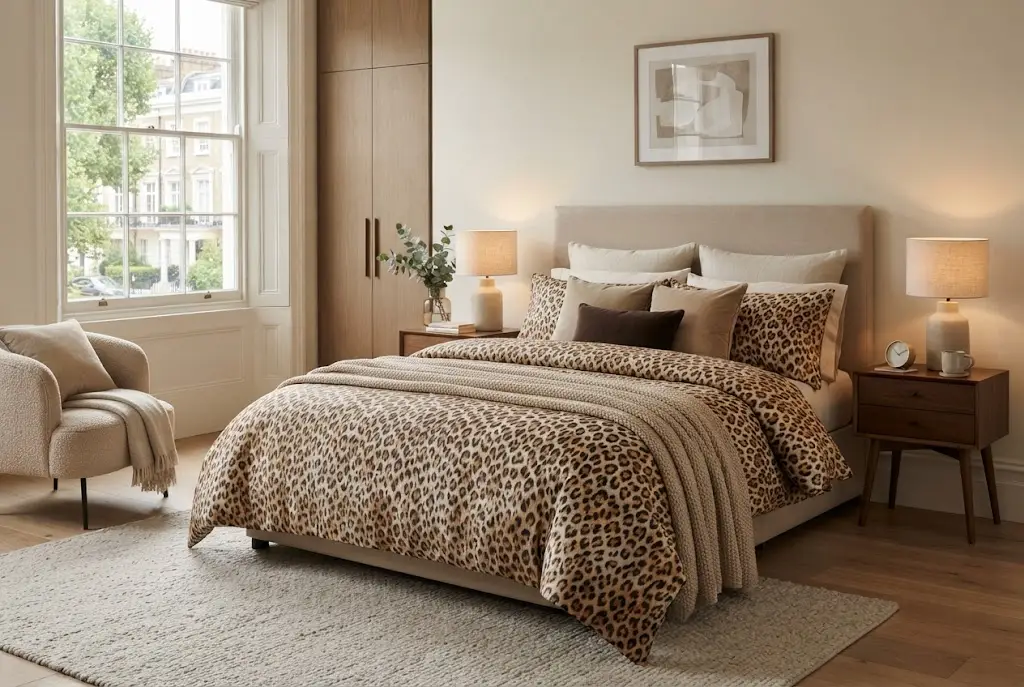
For a stronger animal-inspired alternative, you can explore leopard bedding as another way to introduce statement pattern into the bedroom.
What to Look for When Buying Geometric Bedding
Before buying a new set, consider the practical details as well as the appearance. Check the duvet and pillowcase sizes carefully, particularly if you have a UK-specific bedding size such as single, double, king or super king.
It is also worth checking the fabric composition, washing instructions and care requirements. Bedding that is easy to wash and maintain is more practical for everyday use.
Think about how the pattern will look after repeated washing as well. A design that works with your existing bedroom furniture and accessories will generally give you more flexibility over time.
Final Thoughts on Geometric Bedding
Geometric bedding offers a practical way to introduce modern pattern into a bedroom without undertaking a complete redecoration. Whether you prefer subtle lines, monochrome grids, soft repeating shapes or bold abstract designs, there is plenty of scope to create a look that feels personal.
The most successful approach is to treat the bedding as part of the wider bedroom design. Balance stronger patterns with plain layers, repeat colours through smaller accessories and use texture to keep the room inviting.
Most importantly, choose a design that works with the space you already have. With thoughtful colour selection and simple layering, geometric bedding can become a stylish focal point while keeping the bedroom comfortable, cohesive and distinctly modern.
For general guidance on creating a comfortable bedroom environment, the NHS advice on making your bedroom comfortable for sleep also highlights the importance of a comfortable, quiet and cool sleeping environment.