There’s a common myth that large event security is a “one-size-fits-all” concern. Many assume that with the right venue and a good guest list, everything will go smoothly. The reality, however, is far from this oversimplification. A lack of detailed security planning can turn a dream event into a nightmare. The importance of having a tailored security strategy for large events cannot be overstated. Here’s a personal story of what happens when you let your guard down – and how you can avoid making the same mistake.
When I started planning my first large event, a luxury wedding for a high-profile client, I was confident that everything would go according to plan. I focused on the guest list, the décor, and, of course, the dress. What I didn’t focus on enough was security. After all, who would ever think a glamorous wedding could turn into a dangerous situation? Spoiler: I should’ve thought about it. When a gatecrasher slipped into the event and caused a scene, I realized that security isn’t just about hired bouncers – it’s about creating a comprehensive, well-thought-out strategy to ensure everyone’s safety.
Now, having worked on several large events, I can tell you: effective event security planning is critical. The key to a successful, stress-free event lies in preparation, anticipation, and attention to detail. Security is not an afterthought. It’s an essential part of the planning process.
The Importance of Early Security Planning
In my case, I didn’t start planning for security early enough. It was only when I realized the magnitude of the situation that I scrambled to arrange for extra staff, but by then, the damage had been done. This is a lesson many event planners learn the hard way. For large events, planning security should be one of the first steps, not an afterthought. Ensuring the safety of your guests and the integrity of the event itself requires a proactive approach.
Whether it’s a wedding, a corporate gala, or any other high-profile gathering, security risks can manifest in many ways. From potential crowd control issues to physical threats or even cyber-attacks, the spectrum is wide. Every event has its unique needs, and security should be customized to fit those needs. That means understanding the flow of your event, identifying possible vulnerabilities, and working with professionals who can fill in the gaps.
For example, at Style Me Pretty, we often work with event planners who are mindful of security challenges – especially those involving guests with high public profiles. Many of our partners focus on securing the guest list by screening all invitees, implementing private entrances, and sometimes hiring off-duty law enforcement to prevent uninvited guests from accessing the event.
Essential Steps for Comprehensive Event Security
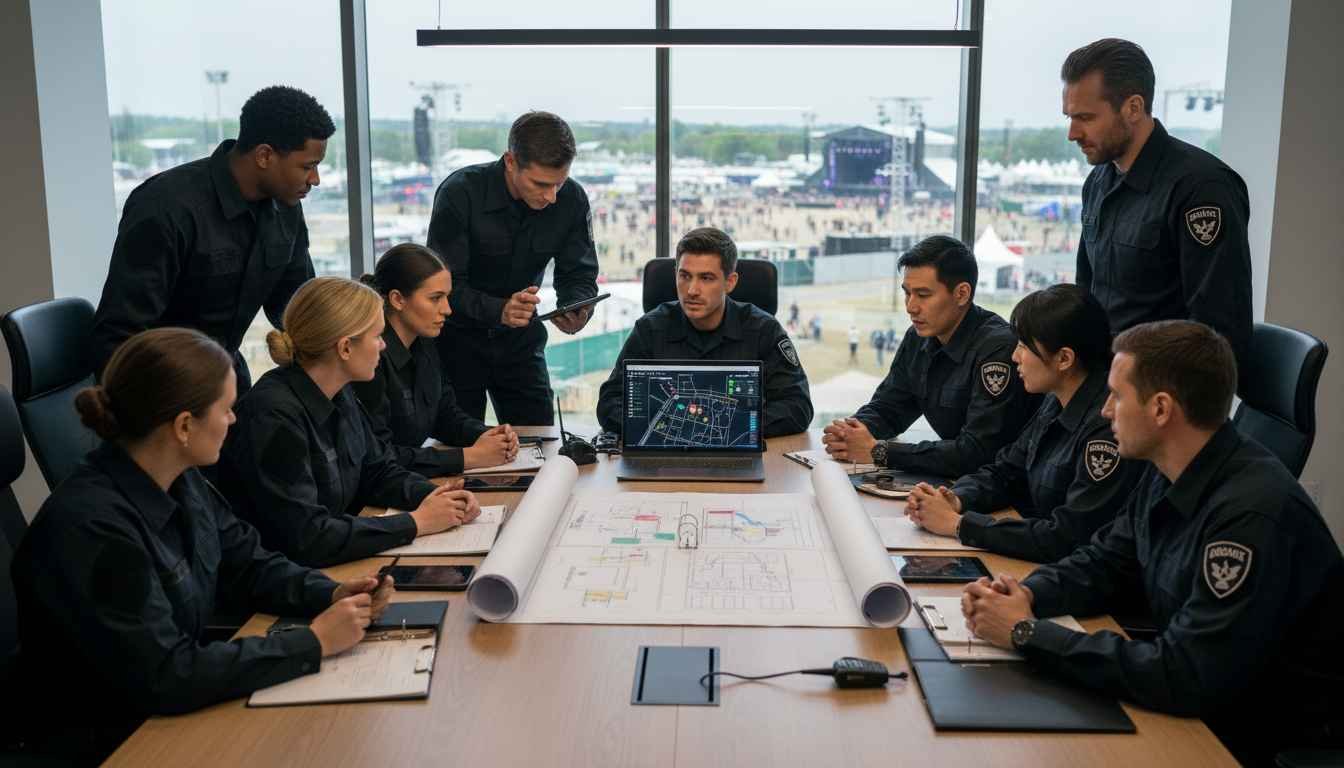
Here are the critical steps every event planner should follow to ensure robust security:
1. Risk Assessment
The first step in large event security planning is a comprehensive risk assessment. This involves looking at your venue and identifying potential security threats. Are there easily accessible areas where intruders could enter? Is there enough lighting in critical spots? Could the guest list be a target for gatecrashers? Identify every possible risk, from physical threats to logistical issues like parking and crowd control.
2. Hiring the Right Security Team
It’s crucial to hire a team that understands the specific demands of your event. Not all security personnel are created equal. While some specialize in crowd control at concerts or festivals, others may be better suited to the subtle needs of a wedding or corporate gathering. Ideally, you’ll want professionals who are trained in de-escalation techniques, capable of discreetly managing situations before they escalate.
3. Creating a Contingency Plan
No one likes to think about worst-case scenarios, but planning for them is essential. What happens if there’s a medical emergency? What if an uninvited guest attempts to crash the event? Having a clear contingency plan in place can save you from chaos. This includes knowing who to call in case of an emergency and having specific protocols for dealing with different types of threats.
4. Access Control
Access control is one of the most overlooked aspects of event security. Whether it’s a private wedding or a corporate conference, keeping track of who’s coming in and out is critical. Consider using wristbands, guest lists, or even digital tickets with QR codes for secure entry. This way, you can ensure that only invited guests are allowed into the venue and that unauthorized individuals are quickly escorted out.
5. Surveillance and Monitoring
Setting up surveillance cameras throughout the venue is another essential step in securing your event. Cameras act as a deterrent to potential troublemakers and provide real-time footage in case of an incident. Additionally, having someone monitoring the footage ensures that any suspicious activity can be flagged immediately.
Who Should Avoid This?
Event security planning isn’t something that’s suited for everyone. If you’re organizing a very small gathering with a close-knit group of friends or family, many of these measures may not be necessary. For example, a backyard wedding or a local church ceremony typically doesn’t require the same level of security as a high-profile event. However, if you’re working with any level of public exposure or hosting a large crowd, you’ll need to scale your security plan accordingly.
Potential Drawbacks of Over-Planning Security
While planning for security is essential, there is such a thing as overkill. Some planners go to extreme lengths – requiring multiple layers of security, checking bags, conducting full-body scans, and more – which can create a tense, unwelcoming atmosphere for guests. It’s important to find the balance between safety and enjoyment. Too much security can feel invasive, so be mindful of how your guests experience the event. Always take a guest-first approach when designing your security protocols.
Conclusion: The Lesson Learned
Looking back on that wedding fiasco, I can honestly say that it was a valuable lesson in the importance of detailed security planning. In a world where large gatherings are sometimes targeted for disruption, your first priority should always be the safety of your guests and the smooth operation of the event. As event planners, we have a responsibility to ensure our clients can enjoy their big day without worrying about what might go wrong. The best way to prevent security mishaps is simple: plan ahead, involve experts, and don’t underestimate the importance of a solid security strategy.